
Voice Cloning Scams: How AI‑Generated Calls Trick Employees into Costly Mistakes
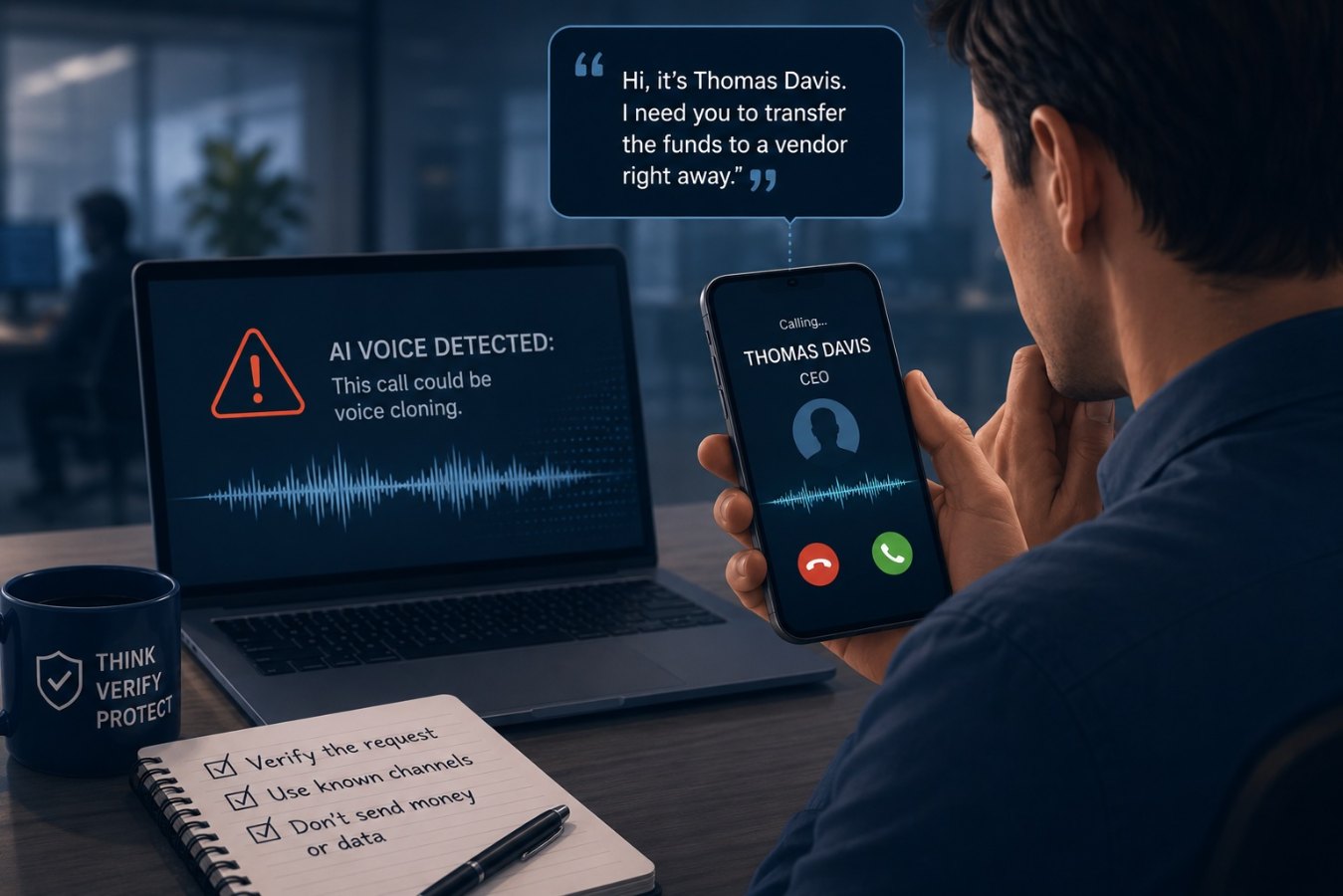
Employees have learned to question strange links and suspicious emails, but are they ready to question a phone call from the boss? Voice cloning scams use generative AI to mimic the speech patterns of executives and coworkers, making it harder than ever to distinguish a fraudster from a colleague. Audio deepfakes can convincingly imitate leadership voices, coaxing unsuspecting staff into transferring money or sharing sensitive information. Understanding how these scams work and how to respond can prevent expensive mistakes.
What is a voice cloning scam?
Recent advances in artificial intelligence make it easy to clone someone’s voice using publicly available recordings. Attackers feed clips of a target’s speech into a machine‑learning model that replicates the tone, cadence and accent. They then call employees using this synthesized voice to request urgent wire transfers, gift card purchases or confidential data. Because the voice sounds familiar, victims may comply without the normal skepticism they would apply to an email or text.
Unlike traditional phishing, these scams rely on real‑time interaction. The caller may know personal details gathered from social media or previous breaches to make the conversation feel legitimate. The fraudster often introduces a sense of urgency—claiming a crisis, a confidential deal or an emergency expense—to pressure the employee into acting quickly.
Real‑world examples
While audio deepfakes are still relatively uncommon compared to email phishing, several incidents in recent years illustrate their potential impact:
- Impersonated executive requests a money transfer. In one well‑publicized case, a finance employee at a multinational company received a call from someone who sounded exactly like their regional CEO. The “CEO” said a confidential acquisition required immediate funds and instructed the employee to wire hundreds of thousands of dollars to a foreign account. Believing the call was authentic, the employee complied. It was only later that the organization discovered the voice was a deepfake, and the money was gone.
- Fake video meeting with cloned voices. Attackers assembled a video call for an overseas worker that included what appeared to be multiple company executives. The video feeds were stitched together from publicly available footage, and the voices were synthetically generated to match. During the call, the “executives” instructed the employee to transfer millions of dollars to a designated account. The scam was convincing enough that the employee nearly proceeded before noticing minor inconsistencies and reporting the incident.
- Attempted voicemail from the CEO. At another organization, an employee received several WhatsApp messages and a voicemail from someone claiming to be the CEO. The messages used the correct name and sounded like their leader, but they came from an unfamiliar number and urged the employee to respond outside normal channels. Recognizing the hallmarks of social engineering—unusual communication method, urgency and secrecy—the employee refused to engage and immediately notified security.
These scenarios show that deepfake calls can target any sector. Fraudsters look for organizations with publicly available recordings of executives and employees who handle finances or privileged information.
Warning signs: how to spot a voice clone
Voice cloning technology is improving, but there are still red flags that employees can watch for. Train staff to treat any request—especially for money or sensitive data—with caution if they notice any of the following:
- Unusual communication channels. Legitimate executives rarely ask for payments or credentials through personal messaging apps or unfamiliar phone numbers. If a call or message comes through an unconventional platform, verify through official channels.
- Forced urgency and secrecy. Fraudsters often claim a crisis, confidential deal or time‑sensitive opportunity to pressure employees into bypassing normal procedures. Any request that discourages verification should be a red flag.
- Inconsistent details. Listen for unnatural pauses, inconsistent accents or mispronounced names. While modern deepfakes are convincing, subtle glitches and mismatched intonations can betray their artificial origin.
- Refusal to use established processes. If the caller resists using the company’s approved payment systems, insists on keeping the conversation secret or discourages written confirmation, stop and verify.
- Requests outside your job scope. Be skeptical if someone asks you to perform tasks that you don’t typically handle or that violate internal controls.
Encourage employees to trust their instincts—if something feels off, it probably is.
Protecting your team
Organizations can reduce the risk of falling victim to voice cloning scams by implementing strong processes and continuous education:
- Establish multi‑person approval for transfers. Require at least two authorized employees to approve large wire transfers or changes to financial details. A simple callback procedure to an official number can stop a scam in its tracks.
- Use known contact methods for verification. If an employee receives an unusual request by phone or messaging app, they should hang up and call the executive back using a number listed in the company directory. Never rely solely on the contact details provided in an unsolicited message.
- Limit public recordings. Reduce the amount of high‑quality audio and video of executives available online. Consider restricting the publication of keynote speeches or webinars to internal platforms to make cloning harder.
- Provide ongoing training. Regular awareness sessions and simulated social‑engineering exercises help employees recognize evolving tactics. Update training programs to include audio and video deepfakes alongside email phishing and ransomware simulations.
- Encourage prompt reporting. Create a culture where employees feel comfortable pausing suspicious requests and escalating to security teams without fear of repercussions. Early reporting allows organizations to respond quickly and minimize damage.
Conclusion
Voice cloning scams illustrate how cybercriminals exploit trust and new technology to bypass traditional defenses. By combining AI‑generated audio with well‑researched backgrounds and urgent narratives, attackers can convince employees to act against their better judgment. Organizations must adapt by strengthening internal controls, verifying unusual requests through trusted channels and continuously educating teams about emerging threats.
Building a human‑first defense doesn’t mean mistrusting every call—it means empowering employees to pause, verify and report when something doesn’t feel right. With clear processes and ongoing awareness training, teams can stay one step ahead of fraudsters who sound just like the CEO.